

How Chicago Physical Therapy Can Help Chronic Headaches
Can physical therapy actually help chronic headaches? Headaches linked to neck tension, posture strain, and prolonged screen use may improve when movement around the cervical spine becomes less restricted.
Physical therapy helps many Chicago patients by improving neck mobility, reducing muscular tension, and decreasing physical stress around the neck and upper back.
Let’s look at why chronic headaches keep coming back and what else therapy may help improve.
Why chronic headaches keep coming back

Chronic headaches return when the factors triggering the pain stay part of daily routines. Stress, posture strain, disrupted sleep, and tension around the neck and jaw can repeatedly increase irritation connected to headache symptoms.
Headaches are commonly linked to:
long hours sitting at a desk
excessive phone or screen use
teeth grinding during sleep
dehydration and skipped meals
stress-related muscle tension
frequent use of pain medication
Research also shows that medication overuse may contribute to rebound headaches, where pain returns as the medication wears off.
Common types of headaches physical therapy can help with
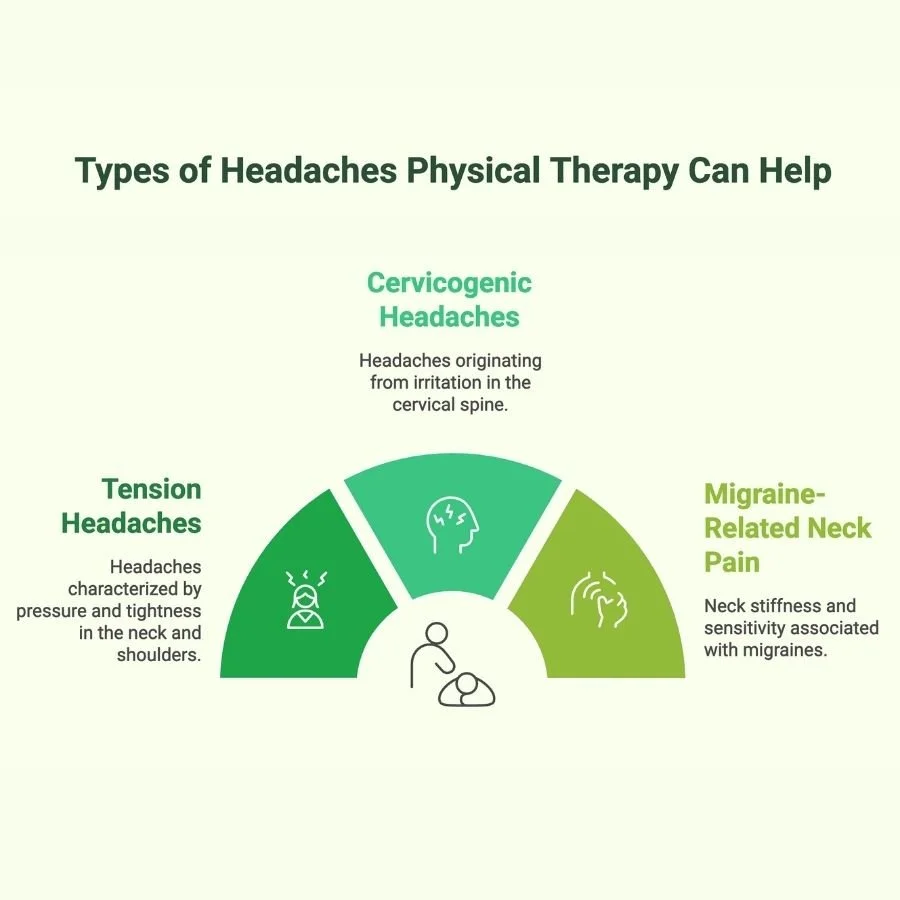
Some headaches are strongly connected to posture, muscle tension, and neck dysfunction. Physical therapy helps identify movement limitations and muscular patterns contributing to recurring symptoms.
Tension headaches
Tension headaches often create pressure around the forehead, temples, or back of the head. Tightness through the neck, shoulders, and upper back commonly contributes to these symptoms, especially after prolonged sitting or stress.
Physical therapy for tension headaches helps improve mobility and reduce muscular strain around these areas. helps reduce this tension.
Cervicogenic headaches
Cervicogenic headaches begin from irritation within the cervical spine. Pain often starts near the base of the skull and may spread toward the eyes, forehead, or one side of the head during neck movement.
Migraine-related neck pain
Migraine-related neck pain commonly involves stiffness and muscle sensitivity around the cervical spine before or during migraine episodes. Physical therapy may help reduce muscular tension and improve movement, contributing to discomfort.
How physical therapy helps chronic headaches

Physical therapy helps chronic headaches by reducing tension and improving movement around the neck and upper back. Chronic pain treatment often focuses on posture, muscle tightness, and stiffness connected to recurring headache pain.
Studies suggest that improving neck mobility and reducing muscular tension help decrease headache frequency and intensity.
What to expect from headache-focused physical therapy

Headache-focused physical therapy usually begins with a movement assessment of the neck, shoulders, posture, and upper back. Physical therapists look for stiffness, muscle tension, movement restrictions, and daily habits that may contribute to recurring headache symptoms.
Treatment may include:
Hands-on therapy for tight muscles and stiff joints
Neck and upper back mobility exercises
Posture correction strategies
Strengthening exercises for postural support
Dry needling for trigger point tension
Most sessions also include home exercises and movement recommendations to help reduce strain during daily activity.
When to see a physical therapist for chronic headaches

A physical therapist may help when chronic headaches keep returning despite rest, stretching, or pain medication. Consider an evaluation of headaches:
Happens multiple times weekly
Worsens after desk work or screen use
Increase with neck movement
Involve neck or shoulder tightness
Interfere with sleep, work, or exercise
Sudden severe headaches, dizziness, numbness, or neurological symptoms should always be medically evaluated immediately.
Start headache-focused physical therapy in Chicago
Long commutes, desk work, colder Chicago weather, and hours spent looking at screens can all increase tension around the neck and upper back throughout the week. As that tension builds, headaches may start affecting focus, sleep, workouts, and daily comfort more often.
Physio Chicago provides one-on-one physical therapy focused on improving neck mobility and reducing tension connected to chronic head pain. Get a Free Consultation to know what may be contributing to your symptoms and how movement-focused care may help.
Frequently asked questions
What do physical therapists do for headaches?
Physical therapists improve neck movement and reduce muscular tension connected to headache pain. They also assess posture, mobility, and stiffness around the cervical spine and upper back.
Can physical therapy help chronic headaches?
Yes, physical therapy may help reduce headache frequency and intensity by improving neck mobility and reducing tension around the cervical spine.
What exercises are good for chronic headaches?
Neck mobility exercises, posture drills, and upper back stretches are commonly used for chronic headaches. These exercises help reduce stiffness and improve movement around the neck.
When should I see a doctor for chronic headaches?
See a doctor when headaches become more frequent, suddenly worsen, or interfere with daily activity. Dizziness, numbness, confusion, or vision changes also require medical evaluation.
What are red flags for chronic headaches?
Sudden severe pain, fainting, slurred speech, weakness, vision loss, or headaches after head trauma are considered red flags. Persistent headaches with fever or neurological symptoms also need urgent medical care.
