

During an iliotibial (IT) band syndrome flare-up, temporarily modify exercises that increase pain along the outside of your knee. Deep squats, heavy lunges, aggressive stretching, and downhill running may aggravate symptoms, but your response determines which movements need adjustment.
IT band syndrome can make running, climbing stairs, and exercise uncomfortable. You usually don’t need to stop every activity, though. Adjusting your workouts and rebuilding strength gradually can help you stay active while you recover.
For recurring outer knee pain, a running injury physical therapist can assess possible causes, training load, and movement patterns. Below are seven activities to modify, along with strength and cardio alternatives.
Why certain movements can aggravate IT band pain

Repeated loading during running or cycling can irritate tissues near the outside of the knee. Current research describes compression of sensitive tissue beneath the IT band as a possible pain mechanism. A sudden jump in training distance or intensity can aggravate symptoms.
Pain usually starts during running or cycling and eases with rest. According to the American Academy of Orthopaedic Surgeons, training mistakes, too little rest, and weak hip muscles can contribute to IT band syndrome.
Which movements aggravate your pain depends on your symptoms and fitness level. A physical therapist can help you identify your triggers and plan a gradual return to activity.
Movements that may need temporary modification
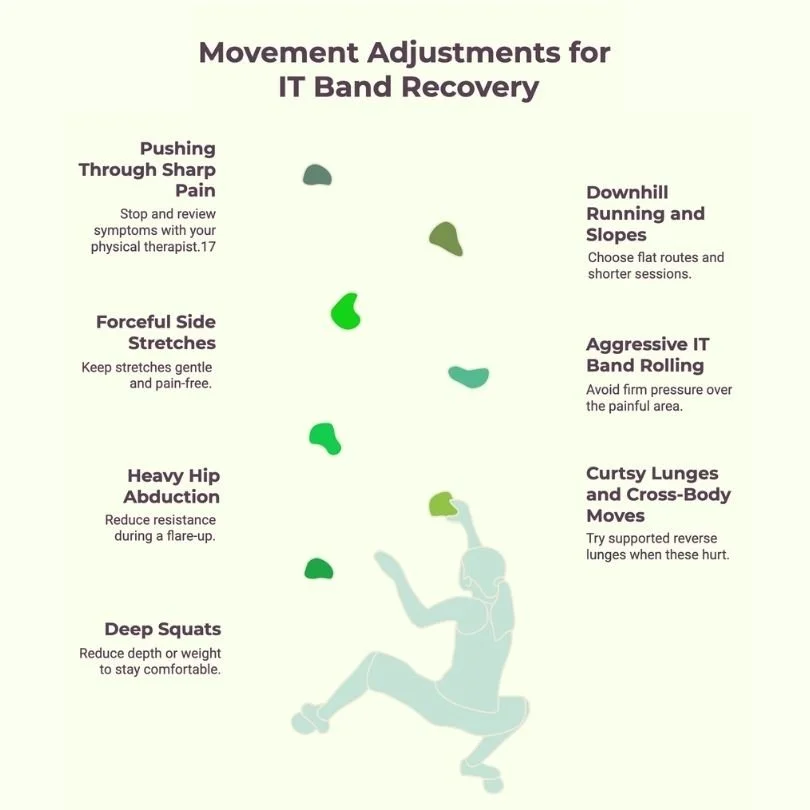
The following seven items highlight movements and workout habits that may need adjustment if they aggravate your symptoms. Instead of treating them as permanent restrictions, use the suggested adjustments to reduce discomfort while maintaining appropriate movement.
1. Deep squats and heavy leg extensions
Deep squats or heavy leg extensions may aggravate symptoms if the depth or resistance exceeds what your knee currently tolerates. Reduce squat depth or resistance, or try controlled sit-to-stands from a chair. Add load gradually once your knee tolerates the exercise without sharp pain or a lasting increase in symptoms.
2. Curtsy lunges and cross-body movements
These move one leg behind and across the body, which challenges hip and knee control. If they trigger outer knee pain, use a supported reverse lunge or shallow split squat instead.
3. Heavy hip abduction during a flare-up
Hip abduction exercises can be part of rehabilitation. Reduce resistance during a flare-up if the exercise reproduces your outer knee pain. Start with side-lying leg raises or standing hip movements without a band. Add resistance once you can control the movement without pain.
4. Aggressive foam rolling on the IT band
Pressing a foam roller forcefully against the painful outer knee can increase discomfort without addressing contributing training and loading factors. Avoid sustained pressure over the tender area. Gentle rolling around the glutes or quadriceps can be more comfortable, provided it does not reproduce symptoms.
5. Forceful side stretches
Deep side bends and aggressive cross-leg stretches can make a sensitive area flare. Use gentle hip mobility movements instead, stopping before pain starts. Stretching should feel controlled and comfortable, not like forcing tight tissue to give way.
6. Downhill running and steep slopes
Downhill running adds repetitive load to the knee, and slanted roads load each leg unevenly. Choose level routes, shorten your sessions, or switch to walking until your symptoms improve.
7. Pushing through sharp outer knee pain
Sharp pain along the outside of the knee is a reason to stop and reassess your workout. Continuing through worsening symptoms can prolong irritation. Record which activity triggered the pain and how long it lasted. These details can help your physical therapist adjust your exercise plan.
Glute exercises for IT band syndrome that may feel better
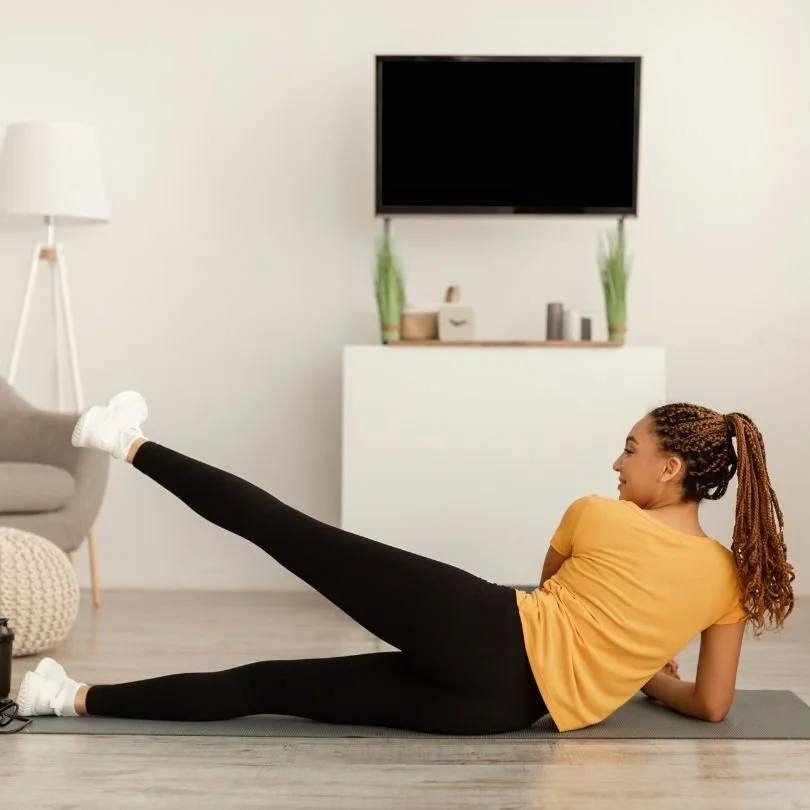
Glute exercises build the hip strength and control that affect how your thigh moves when you walk, squat, and run. They target the muscles around the hip rather than the IT band itself. A 2024 systematic review of IT band rehabilitation identified hip abductor strengthening as a common treatment component, although no single optimal rehabilitation program has been established.
Your physical therapist could recommend these exercises:
Clamshells: Lie on your side with your knees bent and feet together. Lift the top knee without rotating your pelvis.
Side-lying leg raises: Keep your top leg straight and lift it slowly through a comfortable range.
Glute bridges: Lie on your back with your knees bent, then lift your hips while keeping your trunk steady.
Supported single-leg balance: Stand near a stable surface and hold your balance without letting your pelvis drop.
Start with movements that don’t reproduce your familiar knee pain. As your strength improves, your therapist can adjust resistance, repetitions, and exercise choice.
Physio Chicago’s sports injury rehabilitation can help you build an individualized exercise progression.
What cardio can you do with IT band syndrome?

Swimming, pool exercise, and short walks on flat ground may be options if they don’t reproduce your outer knee pain. Walking still involves repeated knee bending under load, so tolerance varies. Cycling and elliptical training can aggravate symptoms and may need to be paused during a flare-up.
Choose cardio you can finish without more pain during the session or the next day. Low-impact doesn’t mean pain-free. For activities you can tolerate, start with short sessions and low intensity, then build up as your knee allows.
If pain rises during a workout or stays worse the next day, shorten the session, lower the intensity, or reduce your range of motion. Pain that persists is a reason to book an evaluation with a physical therapist.
How to return to running without flaring your symptoms

Return to running gradually, change one training variable at a time, and back off when pain returns. Build from short run-walk intervals toward continuous running, and keep strength work going throughout. Use these steps to guide your progression:
Set a comfortable baseline. Walking and basic strength exercises should not bring on outer knee pain.
Start with run-walk intervals. Alternate brief easy jogs with walking on flat ground.
Check your response. Watch for pain during the run, later that day, and the next morning.
Change one variable at a time. Add duration before speed, hills, or hard workouts.
Keep strength training. Hip and lower-body work supports running as your volume grows.
No single schedule fits everyone. Pain duration, strength, running history, and current tolerance all shape how fast you can progress.
If symptoms return at a similar distance or intensity, a running assessment can help identify training factors and movement patterns that need attention.
Build a safer IT band recovery plan in Chicago
Recurring outer knee pain needs more than a list of exercises to avoid. A physical therapy evaluation can assess your knee and hip movement, strength, training history, and the activities that trigger symptoms.
Physio Chicago provides 45-minute one-on-one sessions with licensed physical therapists, without assistants or shared treatment time. Your therapist can build a progressive plan that supports your return to running, workouts, and everyday movement.
Get a free consultation to discuss your symptoms and treatment options.
FAQs about IT band syndrome exercises and recovery
Is walking good for IT band syndrome?
Walking works if it doesn’t bring on outer knee pain. Start on flat ground with short distances, then check how your knee feels afterward. If pain increases, shorten the walk and ask your physical therapist how to adjust it.
What weak muscles can contribute to IT band syndrome?
Reduced hip strength or control may be relevant in IT band syndrome, but not everyone has the same deficits. Your physical therapist can assess hip and lower-body strength alongside your training history and symptoms.
How long should you rest with IT band syndrome?
Rest until your pain settles, and stop running or any exercise that brings on outer knee pain. Keep moving with activity that feels comfortable, since complete inactivity usually isn’t necessary. A physical therapist can set your return based on how your symptoms respond.
Can IT band syndrome heal on its own?
Symptoms can ease with less painful activity and time. Without changes to your training load or movement, pain can return, so a physical therapist can identify those factors and plan a gradual return.
Does massage help with IT band syndrome?
Massage may temporarily ease discomfort in surrounding muscles, but it doesn’t correct the training or movement factors behind the pain. Firm pressure directly over the painful outer knee can make symptoms worse, so avoid it. Gentle work on the glutes and quads is a reasonable addition alongside strength training, as long as it doesn’t reproduce your symptoms.
