


Running Gait Analysis Physical Therapy
Find What’s Affecting Your Stride
Recurring running pain is rarely just about mileage or shoes. At Physio Chicago, your therapist evaluates your stride, cadence, foot placement, joint control, strength, and mobility to identify what’s driving pain and build a safer path back to running.
What Happens During Running Gait Analysis Physical Therapy?
During running gait analysis physical therapy, your therapist observes how you run, reviews your training history, and tests the strength, mobility, and control that affect your mechanics.
Your evaluation may include treadmill or clinic-floor observation, single-leg control testing, hip and ankle mobility checks, cadence review, and a closer look at how your form changes when you fatigue. These findings help explain why pain keeps showing up during runs, workouts, or race training.
At Physio Chicago, gait analysis helps guide the next step in care. If your stride issues are tied to recurring pain, soft tissue irritation, or training-related overload, your therapist may connect your plan with running injuries, sports injury rehab, or sprains and strains treatment.

Who Needs Running Gait Analysis Physical Therapy?
Running gait analysis physical therapy can help if pain keeps coming back, your form changes when you get tired, or you’re unsure how to return to running safely. It gives your therapist a clearer picture of what may be stressing your body with each step.
Running gait analysis can help if you have:
Pain that returns after rest
Shin, knee, hip, ankle, or foot pain
Form changes when you fatigue
A recent mileage, speed, or hill increase
Trouble knowing when to run again
With the right findings, your therapist can help you train with less guessing and a clearer plan for safer running.

Get in Touch Today
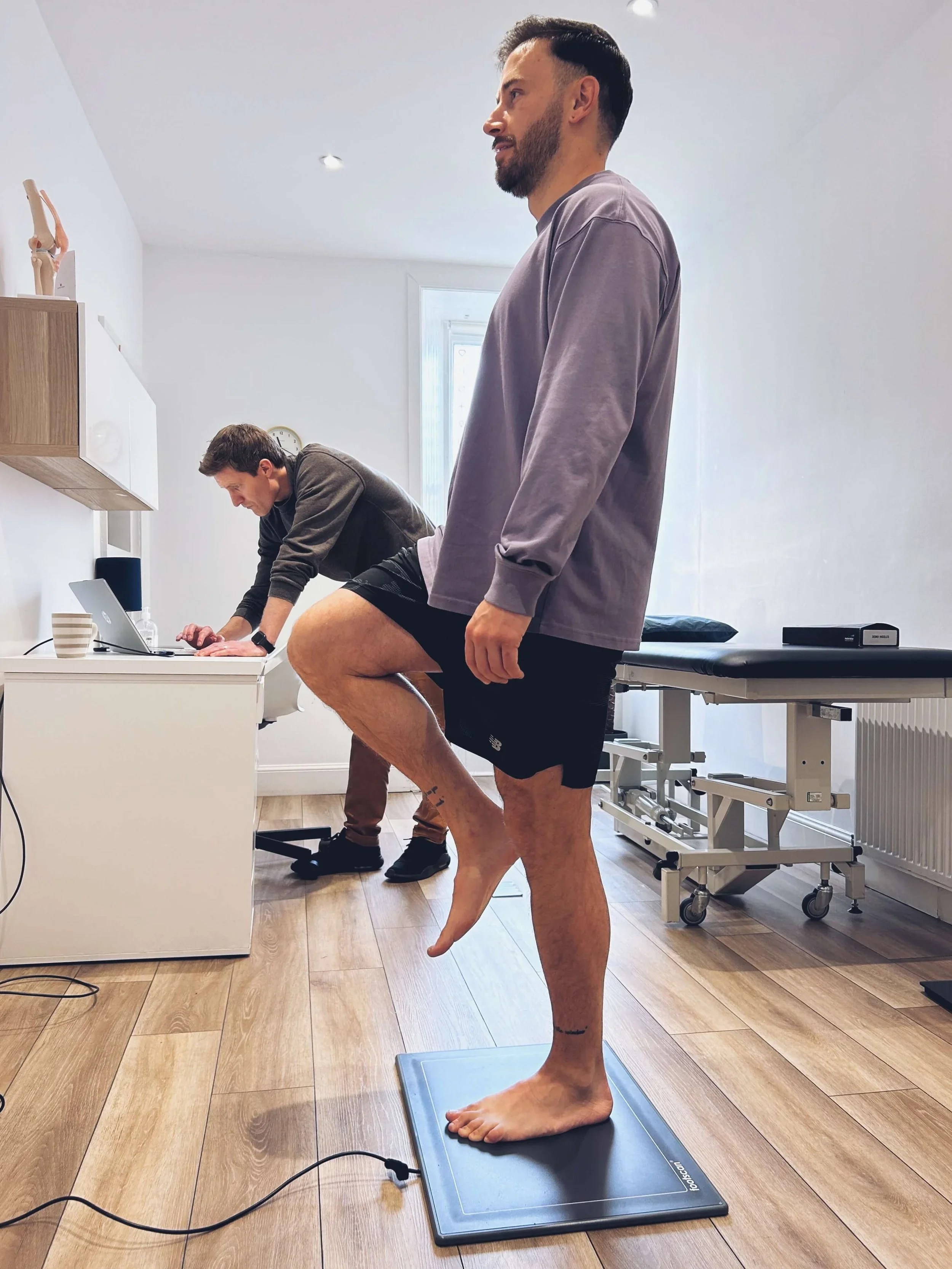
Running Store Foot Scan vs. Physical Therapy Gait Analysis
A running store foot scan can help you choose shoes based on foot shape, comfort, and basic stride patterns. That can be useful if you need better footwear guidance, but it does not explain why pain keeps coming back or what needs to change in your body.
Physical therapy gait analysis looks beyond the shoe. At Physio Chicago, your therapist connects your running mechanics to strength, mobility, training load, and symptoms so your plan addresses the source of pain, not just the gear.
A physical therapist can assess:
Strength deficits
Mobility restrictions
Hip, knee, and ankle control
Cadence and stride mechanics
Pain patterns during training
Return-to-running readiness
The goal is to identify what is stressing your body and what needs to change for safer running.

How to Prepare for Running Gait Analysis
Bring the shoes you usually run in, wear clothes you can move in, and come ready to talk through your training. The more specific you are, the easier it is to connect your symptoms to your running form, gait assessment, and treatment plan.
Before your visit, try to note:
Current weekly mileage
Recent pace or distance changes
Hills, speed work, or surface changes
Where pain starts and stops
Past running injuries
Race goals or training deadlines
That context helps your physical therapy team build a more useful plan around how you actually run.
What to Expect From Running Gait Analysis Physical Therapy
Step 1: Initial Running Assessment
Review of symptoms and training history
Running form or treadmill observation
Strength, mobility, and control testing
Step 2: Gait Findings and Treatment Plan
Clear explanation of what’s affecting your stride
Targeted exercises based on your findings
Form, cadence, or loading adjustments as needed
Step 3: Return-to-Running Progression
Mileage and intensity guidance
Progress checks as symptoms change
Safer plan for training, races, or daily running
Running Gait Analysis Physical Therapy in Chicago
Physio Chicago offers one-on-one physical therapy care at two Chicago locations. Choose the clinic that works best for your schedule, commute, and running routine.
Physio Chicago Old Irving Park
4323 W Irving Park Rd, Suite 1A
Chicago, IL 60641
Our Old Irving Park clinic is a convenient option for runners and active patients on the Northwest Side who want focused care for recurring pain, movement issues, and return-to-running goals.
Phone: (773) 930-3087
Physio Chicago Bucktown
1866 N Damen Ave, Unit 1
Chicago, IL 60647
Our Bucktown clinic offers individualized physical therapy care for runners dealing with training-related pain, orthopedic concerns, and movement-focused recovery.
Phone: (773) 270-6445
Recurring running pain can make it hard to train with confidence. Running gait analysis physical therapy helps identify what is stressing your body and what needs to change for safer, more efficient running.
At Physio Chicago, your assessment is built around how you run, train, and recover. Book a free consultation and take the next step toward clearer answers and a more effective plan.
Run With a Clearer Plan
Frequently Asked Questions
-
Gait analysis in physiotherapy is an assessment of how you walk or run. For runners, it helps identify issues with stride, cadence, foot placement, joint control, strength, mobility, and loading patterns that may contribute to pain or injury.
-
Yes. A physical therapist can perform gait analysis and connect movement findings to pain, injury history, strength, mobility, and return-to-running goals. That makes physical therapy gait analysis more treatment-focused than a basic shoe or foot scan.
-
You may need gait analysis if running pain keeps returning, your form changes with fatigue, or you’re unsure how to return to running safely. It can help with shin, knee, hip, ankle, foot, or recurring training-related pain.
-
Yes, gait analysis is worth it if pain, poor mechanics, or recurring injuries are limiting your running. It gives your therapist clearer information so your treatment plan can target the real problem instead of relying on general exercises or shoe changes.
-
Wear comfortable workout clothes you can run or move in, and bring the shoes you normally use for running. Your therapist may also ask about your mileage, pace, training changes, pain pattern, past injuries, and running goals.
