

Hip Replacement Recovery Exercises To Restore Walking Strength
Walking after hip replacement surgery can feel uncertain. Pain, stiffness, and weakness often make even short walks difficult in the early weeks.
Without the right guidance, it can be hard to know how much movement is safe or which exercises help recovery. This uncertainty can slow progress and make returning to normal walking feel frustrating.
The right hip replacement recovery exercises help rebuild strength, restore mobility, and improve walking stability over time. At Physio Chicago, we guide patients through structured rehabilitation focused on safe movement, strength rebuilding, and confident return to daily activity.
The exercises below can help support recovery and gradually restore walking strength after hip replacement surgery.
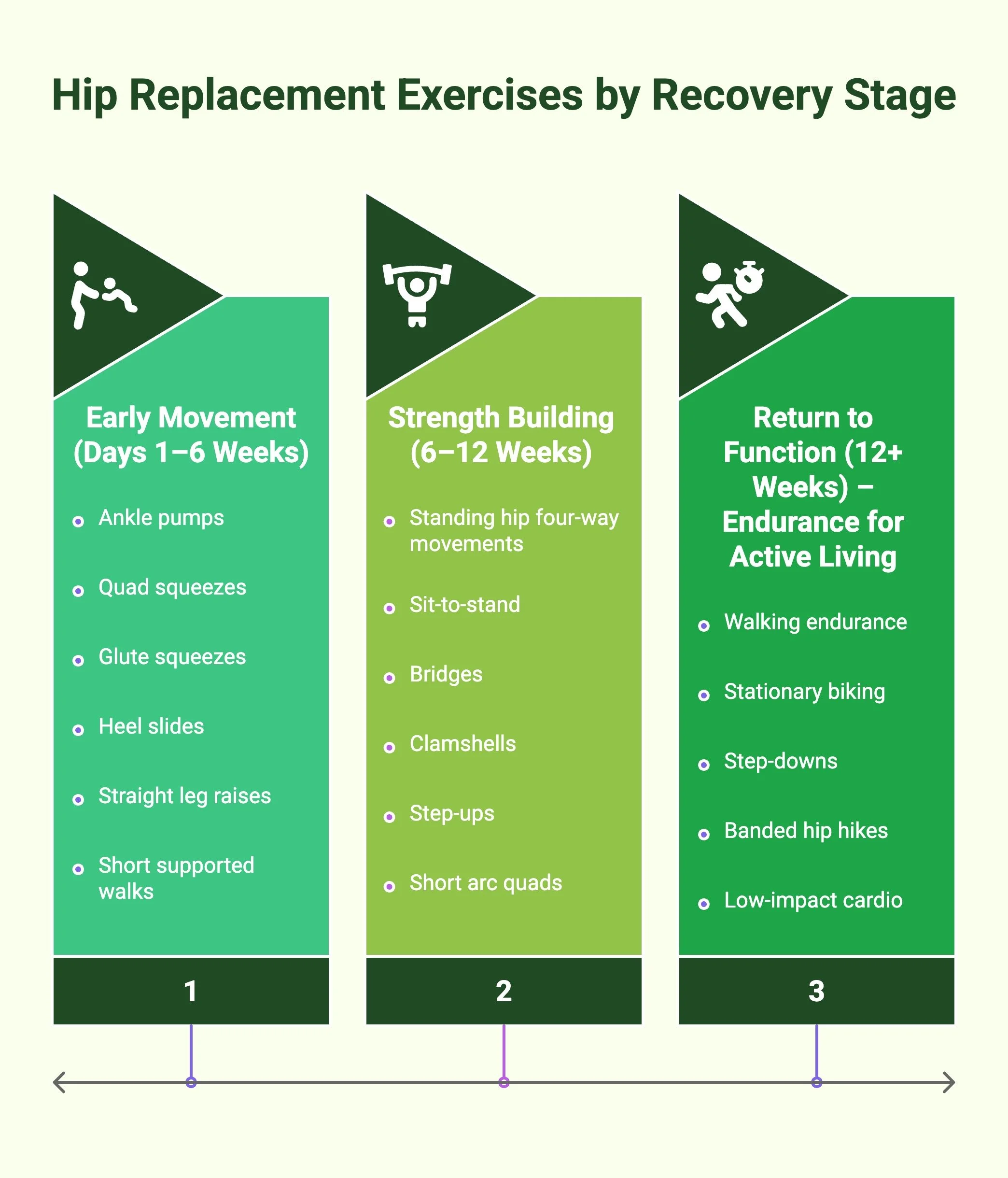
Stage 1: Early Movement (Days 1–6 Weeks)

The first weeks after surgery focus on gentle hip replacement recovery exercises performed in bed or from a chair. These early movements help improve circulation, reduce stiffness, and lower the risk of complications such as blood clots.
Early mobilization has been shown to improve walking ability and reduce postoperative complications during recovery.
It is important to follow precautions such as avoiding leg crossing or bending the hip past 90 degrees.
Key exercises:
Ankle pumps: Lie on your back and move your toes down and up like pressing a gas pedal. Perform 10–20 repetitions every one to two hours to support circulation and reduce swelling.
Quad squeezes: Tighten your thigh muscle by pressing the back of your knee into the bed. Hold for five seconds, then relax. Perform 10 repetitions two to three times per day.
Glute squeezes: Tighten your buttock muscles and hold for five seconds before relaxing. Complete 10 repetitions two to three times daily to gently activate the hip muscles.
Heel slides: Slide your heel toward your buttocks while keeping your kneecap pointing upward. Perform 10 repetitions per leg two to three times per day to improve hip mobility.
Straight leg raises: Lift your operated leg about 12 inches off the bed while keeping the knee straight. Hold for five seconds before lowering slowly. Perform 10 repetitions twice daily.
Short supported walks: Walk with a walker or crutches for five to ten minutes three to five times per day to begin rebuilding walking tolerance.
Spread exercises throughout the day for a total of about 20–30 minutes. Ice the hip for 15–20 minutes after activity if swelling increases.
Progress when exercises feel comfortable, and swelling remains controlled. A physical therapist can help ensure these early movements are performed safely and with proper form.
Stage 2: Strength Building (6–12 Weeks)
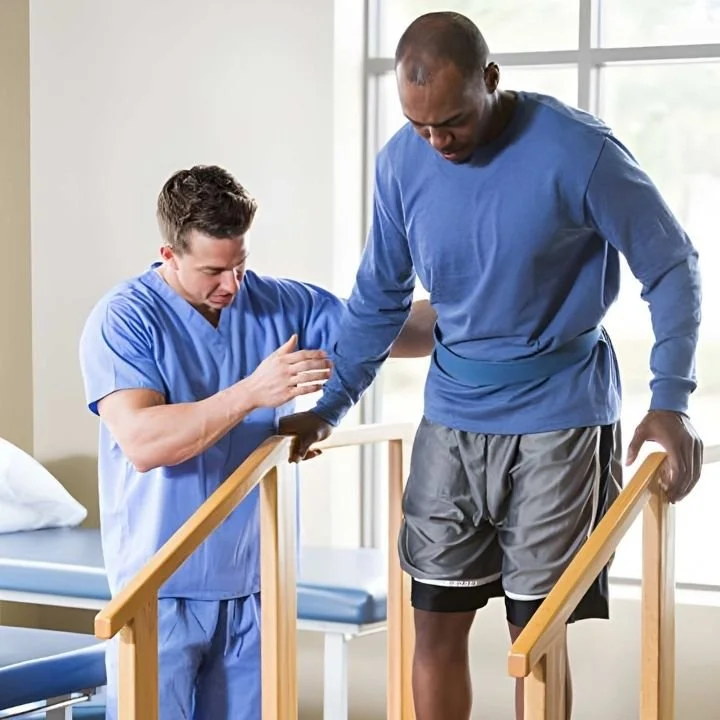
Around six weeks after surgery, rehabilitation begins to focus more on strength and control. With your surgeon’s approval and improved walking stability, you can begin standing exercises that strengthen the muscles supporting the hip joint.
During this stage, many patients gradually reduce reliance on walkers or crutches as walking improves. Hip precautions may still apply depending on your surgeon’s guidance.
Common exercises during this stage include:
Standing hip four-way movements: Hold a chair for balance and move your leg forward, to the side, and backward. Perform 10 repetitions in each direction two to three times per day to strengthen the major hip muscles.
Sit-to-stand: From a firm chair, move to the edge and stand while keeping control through your legs. Slowly return to sitting. Perform 10–15 repetitions to build strength for daily tasks like getting up from a chair.
Bridges: Lie on your back with your feet flat on the floor. Lift your hips while tightening your glute muscles, hold briefly, then lower. Perform 10–15 repetitions three times per week.
Clamshells: Lie on your side with knees bent and lift the top knee while keeping your feet together. Perform 10–15 repetitions per side three times per week. A resistance band can be added later to increase difficulty.
Step-ups: Step onto a four-to-six-inch platform, leading with your stronger leg and following with the operated leg. Step down slowly. Perform 10 repetitions per leg three times per week.
Short arc quads: Place a rolled towel under your knee and straighten your leg while keeping the thigh supported. Hold for five seconds and perform 10 repetitions twice daily.
Strength exercises are typically performed three to five days per week with two to three sets of eight to twelve repetitions. Walking tolerance often increases to 10–20 minutes several times per day as strength improves.
Stage 3: Return to Function (12+ Weeks) – Endurance for Active Living
After about 12 weeks, rehabilitation begins to focus more on endurance and functional movement. At this stage, hip replacement recovery exercises help improve walking stamina and prepare the body for more demanding activities.
Exercises commonly used during this stage include:
Walking endurance: Aim for 20–45 minutes of walking each day on flat surfaces. Gradually add gentle hills as comfort and strength improve.
Stationary biking: Stationary cycling provides low-impact cardiovascular exercise. Start with short sessions and progress to 15–30 minutes three to four times per week.
Step-downs: Stand on a six-to-eight-inch step and slowly lower the operated leg toward the floor. Perform 12 repetitions per leg three times per week to build control and balance.
Banded hip hikes: Stand with a resistance band around the ankles and lift the operated leg slightly outward while balancing. Perform 10–12 repetitions three times per week.
Low-impact cardio: Activities such as elliptical training or pool walking can improve endurance while limiting joint stress.
Managing Pain, Progress, and Precautions

Recovery after hip replacement requires careful progress, with attention to pain levels, swelling, and safe movement as activity gradually increases.
Warning Signs That Need Attention
Sharp pain, sudden swelling, or a feeling that the hip is unstable should not be ignored. These symptoms may signal that the joint or surrounding tissues are being overloaded.
Contact your therapist or healthcare provider if these symptoms appear or worsen.
Progressing Exercises Safely
Exercise progression should be gradual and guided by how your body responds. Comfortable movement, controlled form, and minimal swelling are good signs that the body is ready for more activity.
Increasing exercise difficulty too quickly can slow recovery and increase irritation around the joint.
The Role of Physical Therapy
Many people recover well with a structured home exercise program. Working with a physical therapist can still improve technique, monitor progress, and adjust exercises as strength improves.
Restore Strength and Confidence With Physio Chicago
Recovery after surgery takes time, patience, and the right approach to movement. Following structured hip replacement recovery exercises helps rebuild strength, improve mobility, and support a safe return to walking and daily activities.
Physio Chicago provides personalized rehabilitation focused on safe movement, strength rebuilding, and long-term joint health.
If you are recovering from surgery and want professional guidance through each stage of rehabilitation, reach out today to begin restoring strength and confidence in your movement.
Frequently Asked Questions
When Should I Start Hip Replacement Recovery Exercises?
Most patients begin gentle exercises within 24 hours after surgery. Early movements improve circulation, reduce stiffness, and help prevent blood clots. These exercises also prepare the hip joint for safe walking during the first stage of recovery.
Which Exercises Help Restore Walking After Hip Replacement?
Exercises that strengthen the hip, glutes, and thigh muscles help restore walking ability. Common examples include sit-to-stand movements, bridges, step-ups, and controlled walking practice. These exercises improve stability and support the hip joint during daily movement.
How Long Does It Take To Walk Normally After Hip Replacement?
Many patients begin walking with support within one day after surgery. Most regain comfortable independent walking within six to twelve weeks. Recovery time varies depending on strength, balance, and overall health.
Can Hip Replacement Recovery Exercises Be Done At Home?
Yes, many exercises can be performed safely at home once proper technique is learned. A structured home program helps maintain strength, flexibility, and mobility during recovery.
What Movements Should Be Avoided During Early Hip Replacement Recovery?
Avoid movements that place excessive stress on the new hip joint. This may include crossing the legs, twisting suddenly, or bending the hip beyond recommended limits during early healing.
