

7 Powerful Shoulder Rehab Tips to Recover Better and Faster
Shoulder surgery rehabilitation works best when recovery follows a structured plan that protects healing tissues while restoring movement and strength. A phase-based approach reduces complications and supports long-term shoulder function.
Progress slows when exercises are rushed or when the shoulder is pushed beyond its current capacity. Early mistakes can increase irritation and delay healing.
What makes the biggest difference? Recovery improves when each phase is followed correctly, and adjustments are based on how the shoulder responds to movement and load.
These strategies focus on reducing setbacks, improving progression, and rebuilding strength with better control.
1. Start PT when your surgeon says it is safe
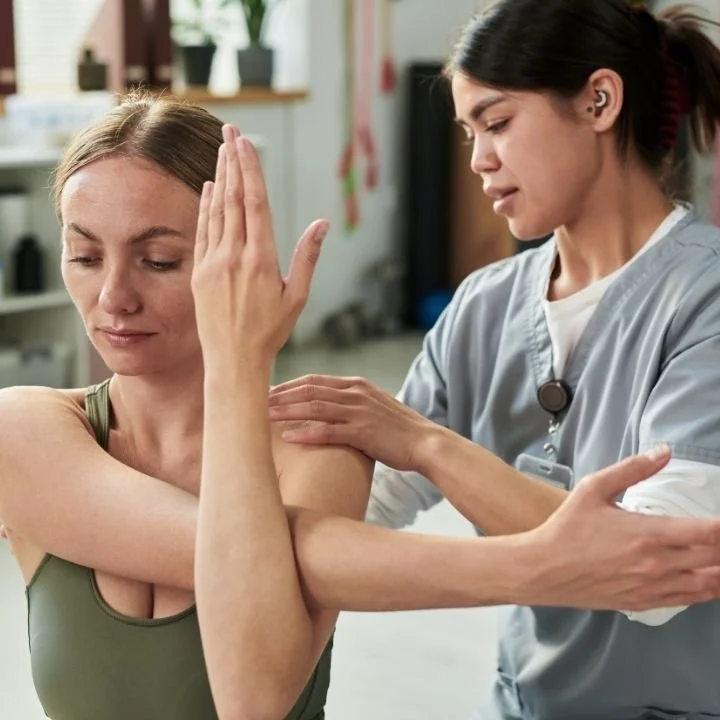
Physical therapy should begin only after your surgeon confirms that the repair is stable enough for movement. The surgeon evaluates tissue healing, surgical technique, and risk of re-injury before clearing you to start shoulder surgery rehabilitation.
Each procedure has different protection requirements, and starting before clearance can place stress on healing structures. Waiting for your surgeon’s approval protects the repair and sets the right foundation for safe progression.
Once cleared, a physical therapist begins with controlled, passive movements and advances exercises based on your surgeon’s protocol and your shoulder’s response.
2. Use your sling correctly in early recovery

Using a sling correctly reduces strain on the shoulder and allows repaired tissues to heal without disruption. Patients typically wear a sling for 18–24 hours daily during the first 4–6 weeks after surgery.
According to research, proper postoperative sling use helps reduce strain on healing tissues and supports recovery during the early immobilization phase. (
The sling should support the arm fully, with the elbow positioned deep in the sling at about a right angle and the hand slightly elevated to reduce swelling.
If an abduction pillow is included, it should sit snug against your ribs to keep the arm slightly away from your body. The sling should be removed only for approved exercises or hygiene.
3. Control pain and swelling early

Managing pain and swelling early helps maintain mobility and supports faster recovery during shoulder surgery rehabilitation. Ice therapy for 15–20 minutes, 3–5 times daily, can reduce inflammation and improve comfort.
Pain that is controlled allows patients to move safely and participate in exercises without guarding. Sharp or increasing pain may indicate overload and should be addressed before progressing to the next activity.
4. Do the right shoulder exercises at the right time
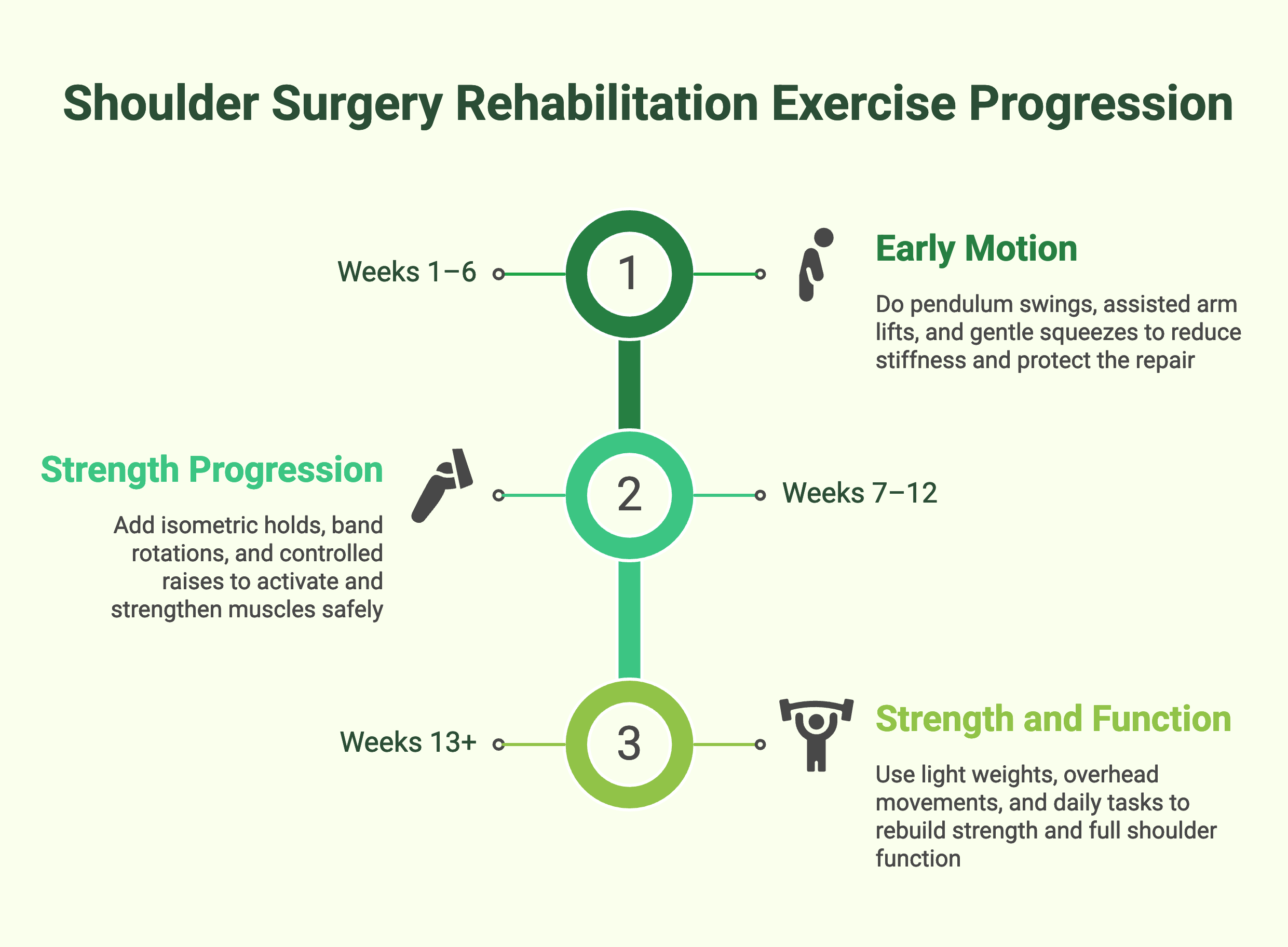
Phase-based shoulder exercises restore mobility first, then build strength to support long-term function during shoulder surgery rehabilitation. Recovery progresses through structured stages, with each phase focusing on specific goals.
Phase 1: early motion (weeks 1–6)
Early exercises reduce stiffness, improve circulation, and protect the surgical repair while restoring gentle motion. Common exercises in this phase include:
Pendulum exercises: Lean forward and let the arm hang, moving in small circles for 30–60 seconds, 2–3 times daily, to improve joint mobility
Passive range of motion: Use your other arm or a stick to lift the surgical arm slowly within a pain-free range for 10 repetitions, 2–3 times daily
Scapular squeezes: Gently pinch the shoulder blades together and hold for 5 seconds, repeating 10 times to support stability
Elbow and hand movement: Perform 10–15 repetitions of elbow bends and hand squeezes to maintain circulation and prevent stiffness
Phase 2: strength progression (weeks 7–12)
Strengthening begins once healing allows active movement without stressing the repair. Exercises introduced during this phase include:
Isometric exercises: Press the arm gently against a wall for 5–10 seconds, repeating 8–10 times to activate muscles safely
Band rotations: Use light resistance bands for internal and external rotation, performing 10–12 repetitions to strengthen the rotator cuff
Active arm raises: Lift the arm to shoulder height with control for 8–12 repetitions to improve functional movement
Phase 3: strength and function (weeks 13+)
Advanced exercises rebuild strength, endurance, and prepare the shoulder for daily and athletic activities. Progression in this phase may include:
Lightweight raises: Use 2–5 pound weights for front and side raises, performing 10–15 repetitions to improve strength
Overhead movements: Gradually introduce controlled overhead lifting to restore the full range of motion
Functional training: Add pushing, pulling, and lifting tasks to simulate real-life movement demands
5. Set up sleep and daily tasks to protect your shoulder

Sleeping in a reclined position at about 30–45 degrees using a recliner or pillows helps reduce pressure and improve comfort.
Support the arm with a pillow under the elbow to prevent it from dropping back, and keep the sling on during sleep unless your surgeon says otherwise. This keeps the shoulder stable and avoids unnecessary stress on healing tissues.
Daily activities should stay controlled and within safe ranges, too. Dress the surgical arm first, keep commonly used items at waist level, and avoid pushing, pulling, lifting more than 2–5 pounds, or reaching overhead until cleared by your therapist.
Keeping movements simple and controlled early on helps protect the repair and supports steady recovery progress.
6. Do not overdo home exercises between PT visits

Doing too many exercises can irritate the shoulder and slow recovery instead of improving it. Most shoulder surgery rehabilitation programs recommend exercises 2–3 times daily with controlled repetitions.
More is not better during recovery. Consistent, properly performed exercises within a pain-free range lead to better outcomes than excessive repetition or pushing through discomfort.
7. Know what is normal and what is a red flag
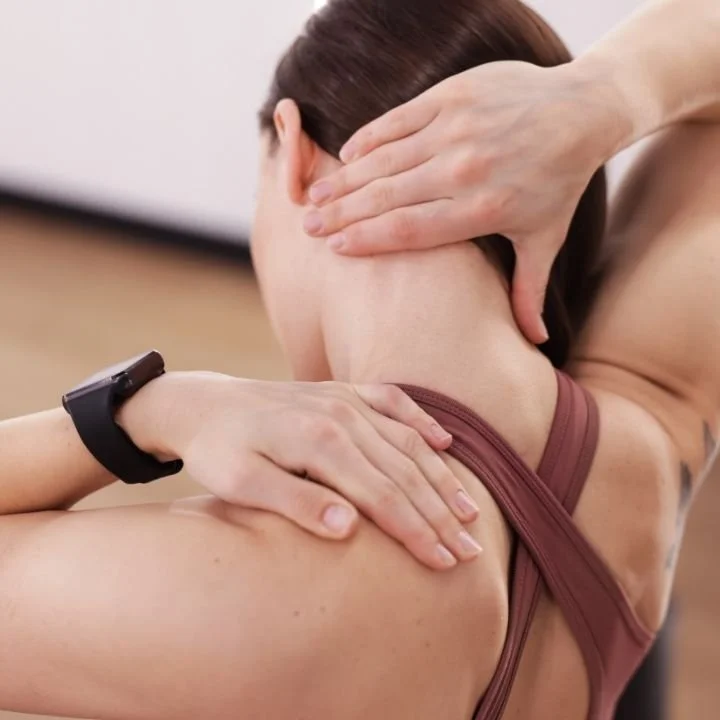
Knowing what is expected during recovery helps you progress safely and identify signs that need attention during shoulder surgery rehabilitation.
Common and expected symptoms include:
Mild to moderate soreness: Discomfort during or after exercises as the shoulder adapts
Stiffness and limited motion: Gradual improvement over time with consistent therapy
Sleep discomfort: Difficulty finding a comfortable position, especially early on
Swelling or bruising: Common around the shoulder or down the arm in early recovery
Red flags that need medical attention include:
Signs of infection: Fever, redness, warmth, or unusual drainage from the incision
Severe or worsening pain: Pain that does not improve with medication or rest
Numbness or tingling: Persistent changes in sensation in the arm or hand
Sudden weakness or instability: A feeling that the shoulder is slipping or cannot support movement
If symptoms feel different from what your surgeon or therapist explained, or if progress stops or worsens, seek medical evaluation promptly to prevent complications.
Get a free consultation for shoulder rehab in Chicago
Shoulder surgery rehabilitation works best when each phase matches your procedure, healing progress, and movement goals. Starting at the right time, protecting the repair, and progressing exercises correctly all play a role in restoring strength and function.
At Physio Chicago, we guide you through each stage with one-on-one care focused on safe movement, strength rebuilding, and long-term shoulder performance. You get a clear plan, direct supervision, and adjustments based on how your shoulder responds.
If you want a structured recovery plan and clear guidance at every stage, get a free consultation and start rebuilding strength with confidence.
Frequently asked questions
When should I start physical therapy after shoulder surgery?
Start physical therapy only after your surgeon clears movement. Clearance depends on repair stability and healing progress, not a fixed timeline.
What is the most painful day after shoulder surgery?
Pain is often highest once anesthesia wears off and early inflammation increases. Discomfort varies by procedure but should gradually improve with proper pain control and protection.
Can you overdo shoulder rehab exercises?
Yes, overdoing exercises can irritate healing tissues and delay progress. Recovery improves with controlled, pain-free movement rather than pushing through discomfort.
How should you sleep after shoulder surgery?
Sleep in a reclined position to reduce pressure on the shoulder. Supporting the arm and keeping the sling on helps maintain stability and comfort overnight.
How long does shoulder surgery rehabilitation usually take?
Recovery length depends on the procedure and how your shoulder responds to treatment. Most patients progress through mobility and strength phases before returning to full activity.
