

When to Start Physical Therapy After Meniscus Surgery
Physical therapy after meniscus surgery usually begins once your surgeon confirms the knee can handle controlled movement without risking the repair. The exact timing depends on whether the meniscus was repaired or trimmed and how the knee is healing.
Recovery timelines can vary. Starting too early can stress healing tissue, while waiting too long can lead to stiffness and delayed progress.
So what actually determines the right time to begin?
The decision comes down to surgical type, swelling, pain levels, and how well the knee tolerates early movement.
These guidelines explain when to start physical therapy after meniscus surgery and how to progress safely through early recovery.
Why timing depends on the type of meniscus surgery
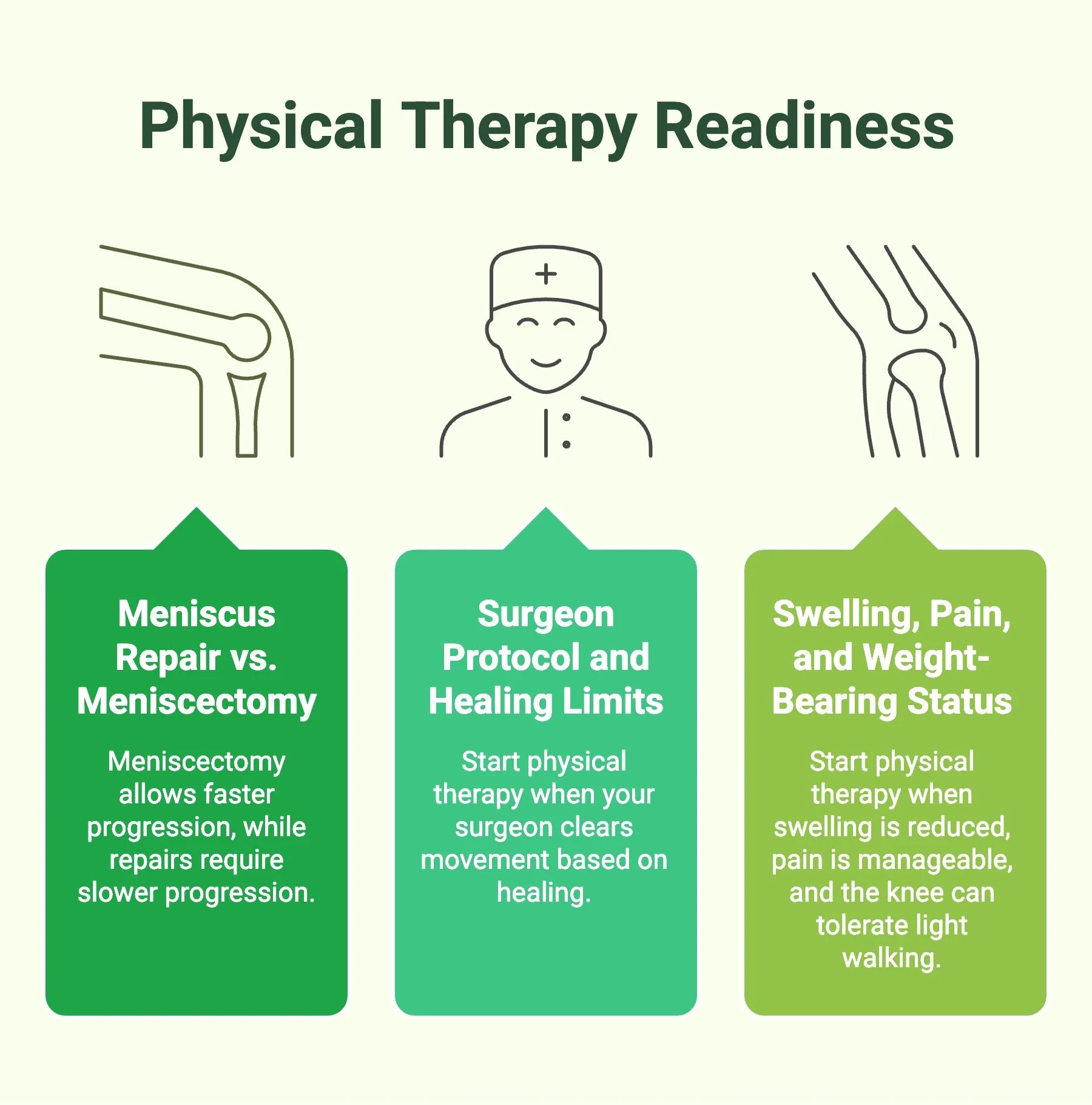
The start of rehab is based on how the meniscus was treated and how much protection the knee needs during healing. Procedures that remove damaged tissue allow earlier movement, while repairs that stitch the meniscus require a slower progression to protect the healing area.
Meniscus repair vs. meniscectomy
Meniscectomy, where damaged tissue is trimmed, allows faster progression with earlier weight-bearing and motion. Meniscus repair stitches the torn cartilage together to help it heal. It requires slower progression and often limits weight-bearing for 2–6 weeks to protect healing.
Surgeon protocol and healing limits
You are ready to start physical therapy when your surgeon clears movement based on how the repair is healing. This clearance means the knee can begin controlled motion without risking damage to the surgical site.
Swelling, pain, and weight-bearing status
You are ready to start physical therapy when swelling is reduced, pain is manageable without constant guarding, and the knee can tolerate standing or light walking without sharp discomfort.
The knee should feel stable enough to bear some weight, even if assisted with crutches. Movement should be possible without significant increases in swelling or pain after activity.
These signs show the knee can handle early rehab safely and begin progressing without overloading healing tissue.
What early physical therapy should focus on
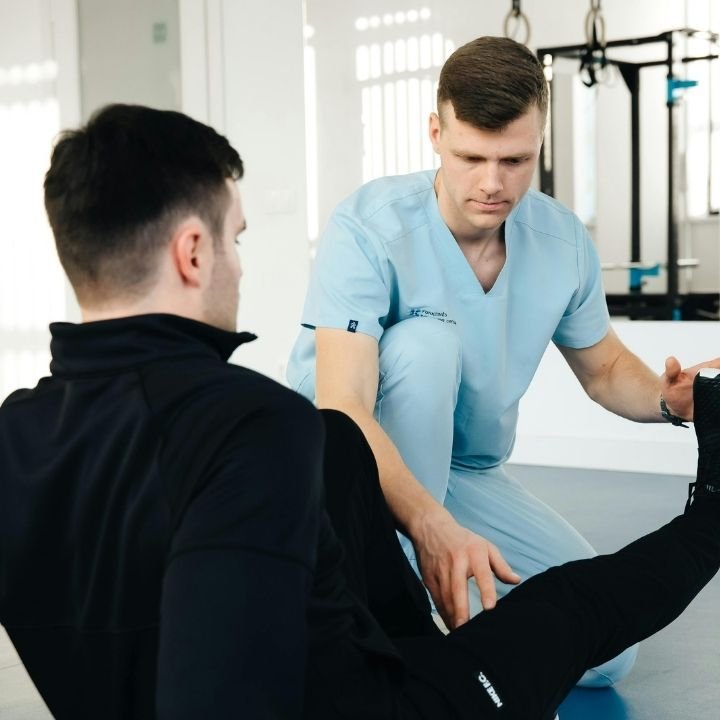
Early physical therapy should focus on reducing swelling, restoring knee motion, and rebuilding basic muscle control without stressing healing tissue. The goal is to help the knee move safely while protecting the surgical site in the first phase of recovery.
Reducing swelling and pain
Reducing swelling and pain helps restore motion and allows muscles to activate properly. Physical therapy supports this through controlled movement and positioning that improve circulation and limit fluid buildup.
Ice for 15–20 minutes several times daily, combined with elevation and gentle range-of-motion exercises, helps reduce inflammation and improve comfort. These steps allow the knee to move more freely without increasing irritation.
Restoring knee motion safely
The focus is on restoring full knee extension first, then gradually improving bending without increasing swelling.
A physical therapist guides the range of motion, uses positioning to support safe movement, and adjusts intensity based on how the knee responds. This prevents stiffness while protecting healing tissue.
Rebuilding quad control and gait
Studies show quadriceps activation supports knee stability and movement control. Exercises such as quad sets and assisted straight leg raises support early strength and reduce limping.
What happens if PT starts too late or too aggressively
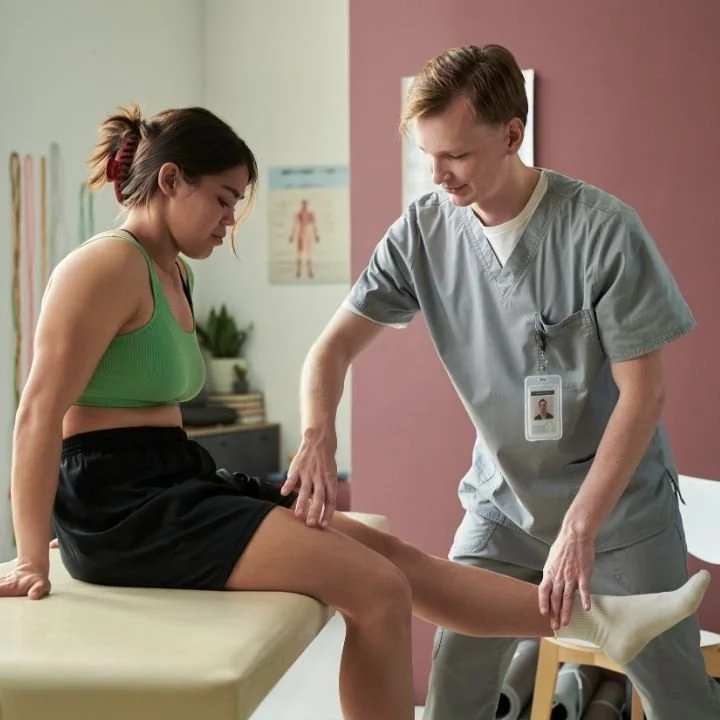
Starting at the wrong time can slow recovery and increase the risk of complications during shoulder surgery rehabilitation. Both delays and excessive intensity can affect long-term outcomes.
If PT starts too late:
Muscle weakness and atrophy develop from lack of use
Joint stiffness increases, making motion harder to regain
Scar tissue builds up, limiting flexibility
Pain may persist longer and delay return to activity
The body compensates, increasing the risk of other injuries
Starting too aggressively can overload healing tissues and increase swelling or pain. Progressing exercises too quickly may slow recovery and increase the risk of complications.
A structured approach balances protection and progression, allowing the knee to recover while gradually increasing load and movement.
What progress should look like in the first weeks
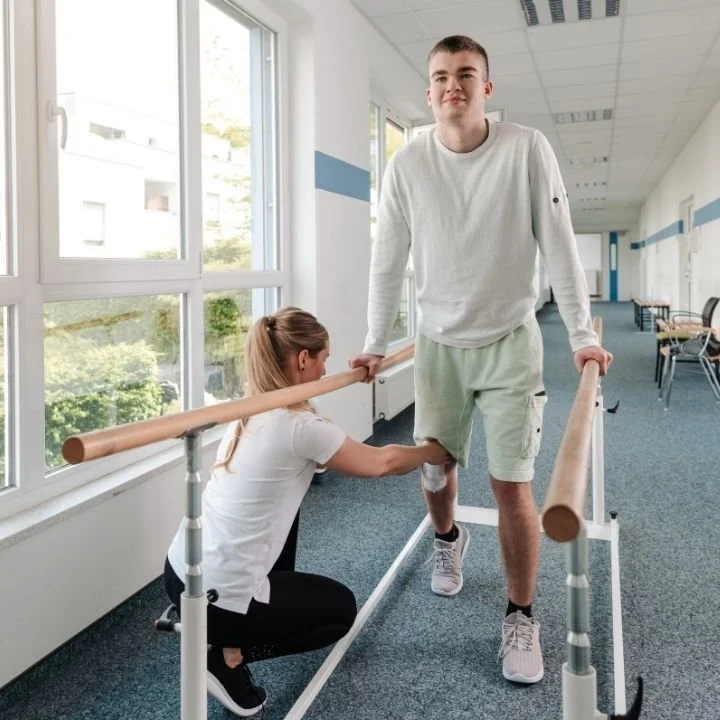
Early recovery follows a gradual pattern where motion improves, swelling decreases, and strength begins to return. Progress is measured by function, not just time after surgery.
The first week after surgery
The first week focuses on controlling pain and swelling while restoring basic movement. Pain and swelling are highest in the first 48–72 hours but should begin to decrease by the end of the week.
Walking may be assisted with crutches, with weight-bearing depending on the procedure. The knee should begin to straighten fully, and gentle bending starts without increasing irritation.
Weeks 2 to 4
Motion improves as swelling decreases and strength begins to return. Knee bending often progresses toward about 90–100 degrees, while full extension should be close to normal.
Walking becomes more controlled, with many patients reducing reliance on crutches depending on surgical restrictions. Strengthening begins gradually to support stability and movement.
When to ask your PT or surgeon questions
Progress should feel steady, with less swelling, better motion, and improved control each week. Pain should decrease and require less support over time.
Seek guidance if swelling does not improve, motion remains limited, or pain increases instead of decreasing. Early adjustments help prevent delays and support consistent recovery.
Get a free consultation for knee rehab in Chicago
When to start physical therapy after meniscus surgery depends on the procedure, healing response, and how well early movement is controlled. The right progression reduces swelling, restores motion, and rebuilds strength without setbacks.
Physio Chicago provides 45-minute one-on-one sessions with a licensed physical therapist, no aides, no overlap, and consistent care from evaluation through discharge. Each phase is adjusted based on how the knee responds so progress stays steady and controlled.
Take the next step toward stronger, more stable movement. Get a free consultation and move forward with a clear recovery plan.
Get a free consultation for knee rehab in Chicago
Recovery improves when each phase supports a return to walking, daily activity, and full knee function. A clear plan helps reduce swelling, restore motion, and rebuild strength without unnecessary setbacks.
Physio Chicago provides 45-minute one-on-one sessions with a licensed physical therapist, no aides, no overlap, and consistent care from evaluation through discharge. Each step is guided to keep progress steady and controlled.
Take the next step toward stronger, more stable movement. Get a free consultation and return to pain-free activity with confidence.
Frequently asked questions
How soon should you start physical therapy after meniscus repair surgery?
Start physical therapy only after your surgeon clears movement. Repair procedures need protection, so therapy begins with controlled motion to avoid stressing the stitched tissue.
What happens if you do not do physical therapy after meniscus surgery?
Skipping physical therapy leads to stiffness, weakness, and poor knee control. This can delay recovery, limit the range of motion, and increase the risk of long-term pain or re-injury.
Can you overdo it after meniscus surgery?
Yes, doing too much too soon can irritate healing tissue and increase swelling. Pushing through pain often slows progress and may affect long-term knee function.
What should I do the first week after meniscus surgery?
Focus on reducing swelling, protecting the knee, and restoring basic movement. Use ice, keep the leg elevated, and begin gentle motion as allowed by your surgeon.
What are the signs that your meniscus repair is healing?
Healing shows through reduced swelling, improved motion, and better knee control. Pain becomes more manageable, and movement feels more stable without sharp discomfort.
