

Spring Sports Injuries in Chicago: How to Stay Healthy All Season
Why do injuries show up right when you get active again in the spring? In Chicago, spring brings a fast shift back to outdoor sports after months of lower activity. That sudden increase can expose stiffness, reduced strength, and old issues that were not noticeable during winter.
Most injuries during the spring season happen because activity increases faster than your body can adapt. Your energy may be back, but your muscles, tendons, and joints still need time to handle higher loads and harder ground.
When what you are doing exceeds what your body can handle, problems start to show up. Building up gradually helps you stay consistent and avoid early setbacks. Here are the injuries we see most this season.
Common spring sports injuries Chicago athletes should watch for

Common sports injuries in the spring include ankle sprains, shin splints, hamstring strains, and knee pain from repetitive stress.
These injuries usually develop when activity increases quickly after winter, especially when transitioning from indoor training to harder ground like pavement or uneven outdoor fields.
Ankle sprains: Happen when you return to uneven outdoor ground and the ankle is not ready for quick direction changes
Shin splints: Pain along the lower leg that builds up when you switch from treadmill running to pavement and increase mileage too quickly
ACL injuries: Occur during sudden stops, cuts, or jumps when the knee is not prepared for that level of movement
Shoulder impingement or rotator cuff irritation: Pain that starts when overhead activity, like throwing, increases too quickly
Tennis elbow: Pain on the elbow that develops from repeated gripping or swinging without enough forearm strength or recovery
Groin and hamstring strains: Pain or tightness that happens when sprinting before strength is rebuilt after winter
Plantar fasciitis: Sharp heel pain that starts when activity increases on hard ground or with poor support
How to prevent spring sports injuries and stay active longer
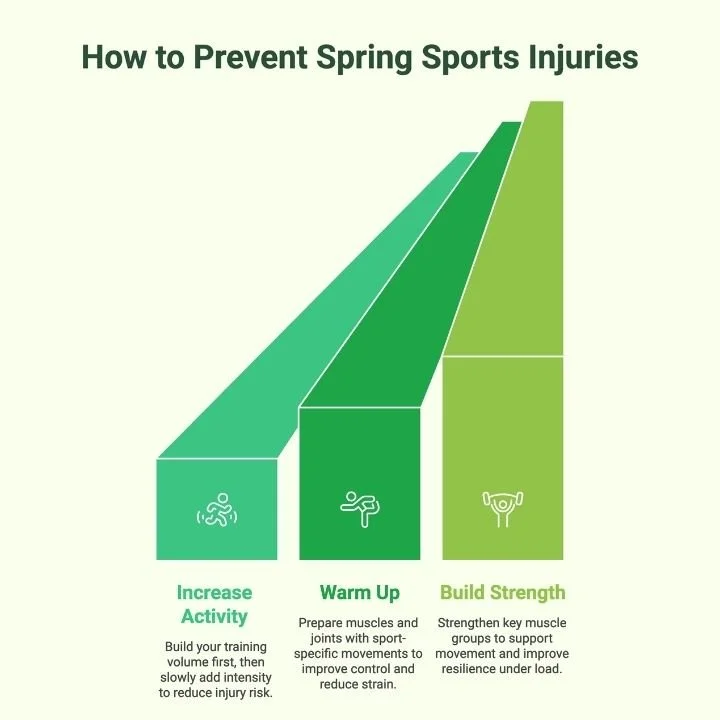
Preventing spring sports injuries starts with controlling how quickly you increase training demands. To stay active through the season, focus on how you build activity, how you prepare your body before movement, and how well you support the areas that take on the most stress.
Increase activity before intensity
Your body adapts better to volume before speed or power. Start with consistent low to moderate activity, such as 20 to 30 minutes per session, then build intensity after your body tolerates the load.
Keep increases gradual. Add no more than 10 percent per week in time or intensity to reduce injury risk. Walking, light jogging, or controlled drills help restore baseline conditioning before adding sprinting or jumping.
Warm up for the sport you are playing
A proper warm-up prepares muscles and joints for movement demands within minutes. A 3 to 5 minute dynamic warm-up increases blood flow, improves coordination, and reduces injury risk.
Include movements that match your sport. For example, runners benefit from leg swings and light strides, while court athletes need lateral movements and short accelerations.
Build strength where your sport creates stress
Strength training targets the areas most affected by your sport. Runners need hip and calf strength, while field athletes benefit from hamstring and core stability.
One example is calf loading. Performing controlled calf raises with 2 to 3 sets of 10 to 15 repetitions improves tendon capacity and reduces strain during running.
Strength creates resilience. Without it, tissues absorb stress without support, leading to breakdown. This is best addressed with guidance from a sports physical therapist who can match strength work to your sport and movement patterns.
What to do if pain starts during spring training
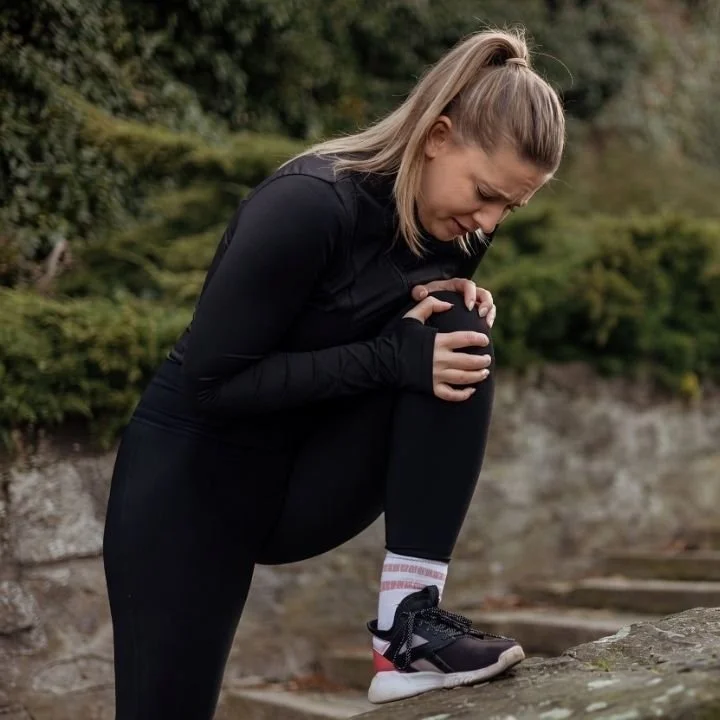
Pain during activity usually means the load you are placing on your body is higher than what it can currently handle. Pushing through it often leads to longer recovery and more persistent issues.
The first step is to reduce the load, not stop completely. Decrease intensity or volume by about 20 to 50 percent so the irritated tissue can settle while still maintaining movement.
In the first 24 to 48 hours, use simple strategies like RICE (rest, ice, compression, elevation) if swelling or irritation is present. This helps manage symptoms and control inflammation without fully removing activity.
Track how your body responds over the next few days. If pain decreases and movement improves, you can gradually build back up. If pain stays the same, worsens, or starts changing how you move, it usually means the issue needs a more targeted approach.
When to see a physical therapist for a sports injury

You should see a physical therapist when pain limits your ability to move, changes how you load an area, or does not improve within a few days. These signs suggest the issue is not resolving with simple activity changes.
Other reasons to seek care include:
You cannot bear weight or push off without pain
Swelling does not improve after 48 hours
You felt or heard a pop at the time of injury
Pain is getting worse instead of better
Numbness or tingling is present
Early evaluation helps identify the source of the problem and how your movement is being affected. Addressing it early reduces the risk of compensation and helps you return to activity with a clear plan.
Stay active this spring with Physio Chicago
Sports injuries during spring often happen when activity increases faster than your body can adapt after winter. Around Chicago, the return to outdoor training and harder ground adds extra stress on joints and soft tissue.
If you notice early soreness, stiffness, or a small setback, it usually means your body needs a better plan, not less movement. Addressing it early helps you stay consistent and avoid more serious injury.
Guidance that matches your sport and how your body moves starts here. Get a free consultation with Physio Chicago and stay active all season.
Frequently asked questions
What sports are popular in Chicago?
Baseball, football, basketball, hockey, and soccer are the most popular sports in Chicago. Participation increases in spring as weather improves, which can raise injury risk when activity ramps up quickly without proper conditioning or movement preparation.
What are the most common spring sports injuries?
Ankle sprains, shin splints, knee pain, and muscle strains are the most common spring injuries. They typically develop when activity increases quickly and the body is not prepared for higher impact, speed, or repeated outdoor movement demands.
What sports are bad for your knees?
Basketball, soccer, and running place the most stress on the knees. These sports involve frequent jumping, cutting, and sudden stops, which increase knee load, especially when strength and movement control are not built up before returning to activity.
What sport causes the most ACL tears?
Sports with rapid direction changes and jumping, like basketball and soccer, lead to the highest ACL injury rates. These movements place high stress on the knee, especially when strength, control, and landing mechanics are not well developed.
How long should a sports injury hurt before getting it checked?
You should get a sports injury checked if pain lasts more than 48 to 72 hours or affects how you move. Severe swelling, instability, or inability to bear weight should be evaluated right away.
