

How Much Does Physical Therapy Cost in Chicago?
Physical therapy costs in Chicago vary by clinic, appointment type, and payment method. An initial evaluation may cost more than a follow-up visit, and your insurance benefits can change what you pay for either one.
To estimate your cost, check your deductible, copay or coinsurance, and the price of each visit. An evaluation then gives your therapist a chance to assess your movement, discuss your goals, and recommend an appropriate plan. If you’re deciding where to start, you can explore our physical therapy services to see the types of care we offer.
Chicago physical therapy rates at a glance

Insurance costs depend on your plan, while a published self-pay rate gives you a starting figure. Here is how the payment options compare, using our listed cash rates as a local example.
| Payment option | Initial evaluation | Follow-up visit | Main cost factors |
|---|---|---|---|
| In-network insurance | Varies by plan | Varies by plan | Deductible, copay or coinsurance, and coverage requirements |
| Out-of-network insurance | Varies by plan | Varies by plan | Out-of-network benefits, deductible, and patient responsibility |
| Self-pay at Physio Chicago | $150 | $125 | Evaluation fee and number of follow-up visits |
We accept Blue Cross Blue Shield PPO, Aetna, UnitedHealthcare, and Medicare. You can confirm our published cash rates in our payment information. Check your specific benefits and estimated cost before treatment; an insurer’s allowed charge may differ from a clinic’s cash rate.
What determines your out-of-pocket cost?

Your deductible, network benefits, and plan requirements each affect what you owe. The number and type of visits matter, too.
Deductibles, copays, and coinsurance
A deductible is the amount you may need to pay for covered care before certain plan benefits begin. A copay is a fixed amount for a covered visit, while coinsurance is a percentage of the insurer’s allowed charge. Depending on your plan, a copay or coinsurance may apply before or after you meet your deductible.
Under Original Medicare Part B, patients generally pay 20% of the Medicare-approved amount for covered outpatient physical therapy after meeting the Part B deductible. Other coverage can change what you owe. See Medicare’s physical therapy coverage guidance for details.
Network status and plan requirements
In-network and out-of-network visits may leave you with different costs. An out-of-network plan may have a separate deductible, provide partial reimbursement, or offer no coverage. Ask your insurer how it would process visits at the clinic you’re considering.
We verify eligibility and benefits before your first visit. You can review our insurance FAQ, but your insurer is the best source for details about your particular plan.
Evaluation type, specialty, and visit frequency
Some plans require prior authorization or limit covered visits. Check if your plan requires a referral and if the services you need have separate coverage rules. Initial evaluations and follow-up visits may also have different prices.
Illinois generally allows you to see a physical therapist without a physician referral. Your insurance plan may still require one for coverage, so check before scheduling.
Insurance or self-pay: which option may cost less?
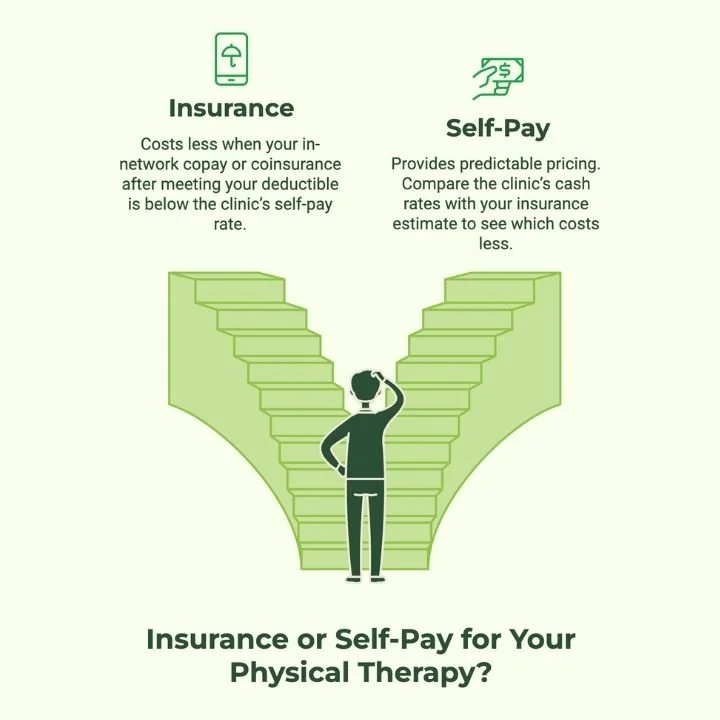
The less expensive option depends on your benefits and the care you need. Compare the cost of an evaluation and follow-up visits under both options.
Insurance may cost less after the deductible
Once you meet your deductible, an in-network copay or coinsurance may be lower than a clinic’s self-pay rate. Ask your insurer what you would owe for an evaluation and a typical follow-up visit rather than assuming every visit will cost the same amount.
Self-pay can provide more predictable pricing
Published cash rates can be easier to budget for. Compare the self-pay total with your insurer’s estimate, and ask the clinic if a specialty evaluation has a different price. If you have out-of-network benefits, ask what documentation is available for a reimbursement claim.
If you have Medicare, check how covered physical therapy must be billed before choosing a self-pay option. A cash rate may not be an interchangeable alternative for covered services.
Total treatment cost matters more than one visit
Comparing the price of a single session misses the cost of the initial evaluation and any follow-up care. For example, at our listed self-pay rates, an evaluation plus five follow-up visits would total $775: $150 + (5 × $125). That is a pricing example, not a recommended number of visits.
What Physio Chicago includes in the visit fee

Price is one part of the comparison. At Physio Chicago, you receive 45 minutes of one-on-one care with a licensed physical therapist, without assistants or shared treatment time. Appointments may run approximately 45 minutes to an hour, depending on your needs.
Forty-five minutes of uninterrupted care
Your session may include movement assessment, guided exercise, hands-on care, and practice you can do at home. Describe a task your symptoms interrupt, such as climbing stairs or running, so your therapist can connect treatment to a practical goal.
One licensed therapist throughout your care
A dedicated physical therapist manages your plan of care, tracks changes, and adjusts treatment as needed. You can ask how your sessions will build on the initial evaluation and how the therapist will assess your progress.
A treatment plan guided by measurable progress
Your therapist can set goals for strength, balance, mobility, pain, or a return to activity. Tracking those goals helps you discuss what is improving and when your plan or visit frequency should change.
How to estimate your total cost before booking

You can make an initial estimate with your insurance details and the clinic’s prices. Refine it after your evaluation, when your therapist can discuss a visit plan.
Verify benefits, referrals, and visit limits
Call your insurer and ask about your remaining deductible, copay or coinsurance, prior authorization requirements, and visit limits. Confirm that the clinic is in network under your specific plan. Write down the answers and the date of your call.
Request a written estimate from the clinic
Ask for the price of an initial evaluation, a typical follow-up visit, and any expected additional charges. If you’re uninsured or won’t use insurance, you can request a Good Faith Estimate of expected charges before care. Keep a copy to compare with your bill.
Recalculate after the initial evaluation
Ask your therapist about the proposed number and frequency of visits, then update your estimate. Your plan may change as you progress, so treat the total as a budget estimate rather than a fixed course of care.
Request a free consultation with Physio Chicago
Knowing how much physical therapy costs in Chicago helps you plan, but your final cost depends on your benefits, the clinic’s rates, and the visits you need. Getting an estimate from your insurer and the clinic can help you avoid surprises.
If you have questions about your symptoms, goals, or payment options, get a free consultation before scheduling an evaluation.
Questions about physical therapy costs
What is the average cost of a physical therapy session in the US?
A national average may not reflect what you will pay because evaluation fees, follow-up fees, appointment lengths, and insurance benefits vary. Ask a clinic for both visit prices and check your expected share with your insurer. Our listed self-pay rates are $150 for an evaluation and $125 for a follow-up visit.
Is physical therapy worth paying for?
Physical therapy may be worth the cost when it helps you work toward a meaningful improvement in movement or daily function. Ask your therapist to explain your goals, how progress will be measured, and when the plan will be reassessed.
How long do people usually attend physical therapy?
There is no set number of visits. Your condition, starting point, response to treatment, and goals shape the plan. After the evaluation, ask your therapist for a proposed visit frequency and revisit it as your function changes.
What is the 8-minute rule in physical therapy?
The 8-minute rule is used in Medicare billing for certain timed therapy services. Generally, eight to 22 minutes of a single service billed in 15-minute units supports one unit. When several timed services are provided, total timed treatment minutes also affect the number of units billed. The rule does not set your appointment length or a clinic’s self-pay price. CMS billing guidance explains the calculation.
What are five warning signs of a bad physical therapist?
Five signs include no clear treatment goals, little attention to your progress, poor communication, the same treatment at every visit despite no improvement, and pressure to continue visits without an explanation. Your therapist should be able to explain your plan and how progress is being measured.
