

How to Rehab a Sprained Ankle Without Reinjuring It
Rehabbing a sprained ankle means restoring motion, strength, balance, and walking control before returning to exercise or sports. Resting until the pain fades is not enough. The ankle also needs to regain the stability to handle uneven ground, quick turns, and full weight-bearing again.
A sprain can feel better before the ligaments and supporting muscles are ready for normal activity. Returning too quickly can lead to another roll, ongoing weakness, or a pattern of repeated ankle sprains.
If you are looking for how to rehab a sprained ankle, here is how to progress safely and when sprains and strains treatment in Chicago may help.
Check for a fracture or severe sprain before starting ankle rehab

You should be checked before starting ankle rehab if you cannot take four steps, have pain directly over the ankle or foot bones, or notice severe swelling, deformity, numbness, or increasing bruising.
An ankle sprain involves stretched or torn ligaments, while a fracture affects bone. They can look and feel similar after a rolled ankle. A study recommends an evaluation for severe pain or swelling, numbness, or an inability to bear weight.
High ankle sprains can also need a different rehabilitation plan because they involve ligaments above the ankle joint. An assessment identifies the injury and how to begin movement safely.
Once a fracture or severe sprain has been ruled out, you can move through the next phases to reduce swelling, restore ankle movement, rebuild strength and balance, and return to activity gradually.
Phase 1: Reduce ankle swelling and protect early movement
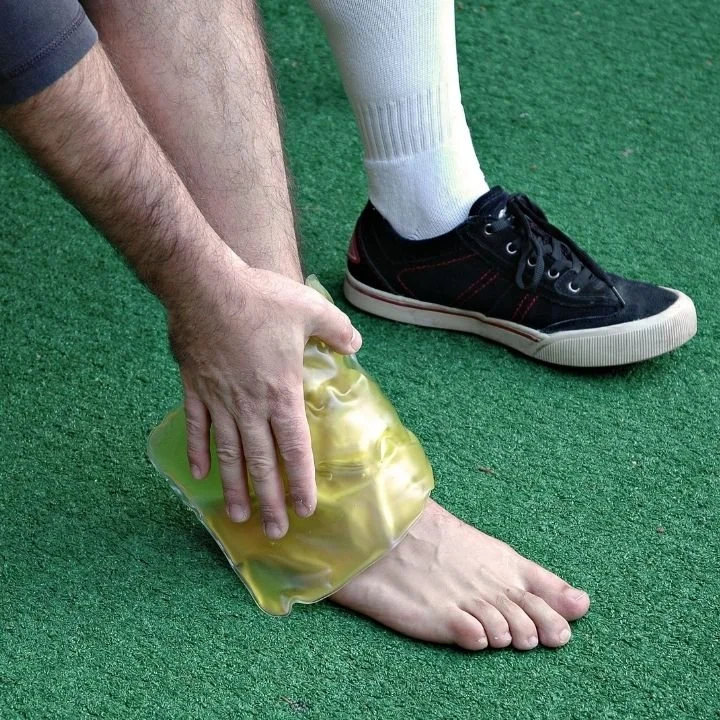
Phase 1 focuses on reducing swelling while protecting the ankle as you begin gentle movement and gradual weight-bearing. Ice, compression, elevation, and temporary support can help you stay comfortable as walking starts to return.
Manage swelling with ice, compression, and elevation
Ice, compression, and elevation can help manage pain and swelling after an ankle sprain. Use a cold pack wrapped in a towel for short periods and do not apply ice directly to the skin.
A compression wrap or ankle sleeve can provide support, while elevating the foot when sitting or lying down may help limit swelling. Loosen it if your toes become numb, tingly, pale, blue, or unusually cold.
Begin protected weight-bearing as tolerated
Start putting weight through the ankle once you can do so without sharp pain or a major limp. A supportive shoe, ankle brace, crutches, or another walking aid can help you load the foot gradually.
Start with short walks on flat ground and add time as walking becomes more controlled. Do not push through pain. If the ankle gives way or swells more afterward, reduce activity and have it assessed.
Phase 2: Restore ankle mobility and normal walking

Phase 2 restores ankle movement and a normal walking pattern after swelling starts to settle. Gentle mobility work helps reduce stiffness, then walking practice helps you use that motion during daily activity.
Practice ankle circles, alphabet exercises, and gentle stretches
Ankle circles, alphabet exercises, and gentle stretches help you regain the motion needed for walking. While seated, slowly circle the foot in both directions or trace the alphabet in the air with your big toe.
Then, point the toes away and pull them back toward you. Add a gentle calf stretch when comfortable. Keep each movement controlled, and reduce the range if you feel sharp pain.
Progress from supported walking to a normal gait
Once ankle motion improves, progress from supported walking to a smooth heel-to-toe gait. Begin with short walks on even ground in supportive shoes, using a counter or walking aid if needed.
Focus on placing the heel down, rolling through the foot, and pushing off through the toes. Add distance before hills, uneven terrain, or speed. Running injury prevention also depends on gradual increases in load.
Phase 3: Rebuild ankle strength and balance
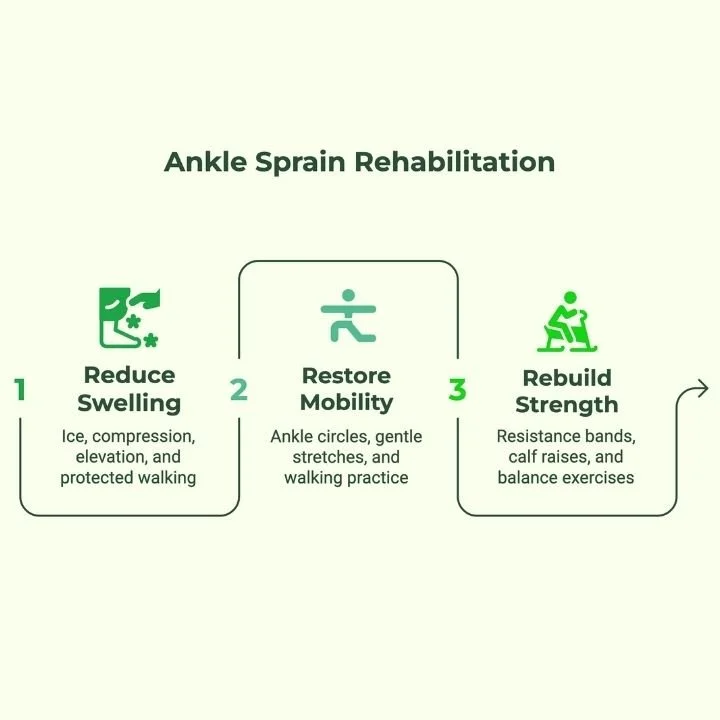
Phase 3 rebuilds strength and balance after you can move and walk more normally. This prepares the ankle to manage stairs, uneven ground, quick changes in direction, and sports.
Strengthen the ankle with resistance bands and calf raises
Resistance bands and calf raises rebuild the muscles that control ankle movement and push-off. Use a light band to move the foot up, down, inward, and outward, keeping the knee still.
Then add calf raises, beginning with both feet before placing more weight through the injured side. Increase resistance or move to single-leg calf raises only when the ankle feels controlled and does not become more painful afterward.
Improve stability with single-leg balance exercises
Single-leg balance exercises help the ankle react when your weight shifts over the foot. Stand near a counter or wall, then place more weight on the injured leg and hold the position with control.
Progress by using less hand support or adding reaching tasks. Sports injury rehabilitation can help connect balance work to running, jumping, cutting, and landing.
Return to exercise and sports without risking another ankle sprain

Return to exercise and sports when the ankle can handle daily movement and activity-specific drills without pain, swelling, or giving way. Before you return to running, jumping, court sports, or field sports, you should be able to:
Walk normally without a limp
Move the ankle comfortably
Complete calf raises and balance on the injured leg with control
Jog, hop, or change direction at a level that matches your activity
Build back gradually by adding distance before speed, speed before jumping, and jumping before hard cutting. An ankle brace or taping may provide extra support during your return, but it does not replace strength and balance work.
Rebuild ankle strength with physical therapy in Chicago
A sprained ankle that remains weak, stiff, or unstable can keep you from walking, training, and returning to normal activity. A focused assessment can identify what is still limiting your movement and what needs to improve before you return.
Physio Chicago provides 45-minute, one-on-one sessions with a licensed physical therapist, with no assistants or shared treatment time. Your care can focus on ankle mobility, walking, strength, balance, and sport-specific movement.
Get a Free Consultation to discuss ankle rehabilitation in Chicago.
FAQs about sprained ankle rehabilitation
How do I know if my ankle sprain is serious?
A serious sprain may cause severe swelling, bruising, instability, numbness, or an inability to bear weight. Pain directly over the ankle or foot bones can also indicate a fracture and should be medically evaluated.
How long does a sprained ankle take to heal?
Recovery depends on the severity of the ligament injury, swelling, stability, and how the ankle responds to rehabilitation. A mild sprain may improve sooner, while a more severe sprain can need a longer recovery plan.
Is it safe to walk on a sprained ankle?
Walking can be appropriate if you can bear weight without sharp pain or a major limp. If walking causes worsening pain, instability, or swelling, reduce activity and have the ankle assessed.
Is heat or ice better for a sprained ankle?
Ice is usually more helpful early after a sprain because it can manage pain and swelling. Heat may help later with stiffness, but avoid it while the ankle is still swollen or warm.
What not to do when you have a sprained ankle?
Do not push through sharp pain, return to sports too early, run with a limp, or force painful stretches. Avoid heat during the early swollen stage, and seek care for numbness, deformity, or inability to walk.
