

Do Vestibular Disorders Go Away or Require Treatment?
Vestibular disorders can go away, improve with treatment, or need long-term management. The recovery timeline depends on the diagnosis, the cause of the dizziness, and how your balance system responds to treatment and movement.
Dizziness can make simple movements feel uncertain. Turning in bed, looking over your shoulder, walking through a crowded store, or exercising may bring on spinning, nausea, or a feeling of not being steady on your feet.
If you are asking, “Do vestibular disorders go away?” this guide explains what affects recovery and how vestibular and post-concussion physical therapy may help Chicago patients improve balance, movement confidence, and daily function.
Why vestibular recovery depends on the diagnosis

Different vestibular disorders have different causes, treatments, and recovery timelines. Benign paroxysmal positional vertigo (BPPV) may improve after a repositioning maneuver, while vestibular migraine, Ménière’s disease, and persistent postural-perceptual dizziness (PPPD) often require ongoing symptom management.
The vestibular system includes parts of the inner ear and brain that control balance and process movement. Cleveland Clinic explains that a disorder may affect the inner ear, vestibular nerve, or central nervous system. Identifying the affected area helps determine the appropriate treatment.
Recovery may also depend on:
How long symptoms have been present
The severity of dizziness or imbalance
Hearing, vision, or headache symptoms
A recent illness, concussion, or head injury
How quickly treatment begins
Consistency with vestibular exercises
An accurate evaluation can determine if you need a repositioning maneuver, vestibular rehabilitation, medical treatment, or specialist care.
How long common vestibular disorders may last
Common vestibular disorders can last from a few seconds per episode to months or longer, depending on the condition. The timeline below gives a general idea of recovery, but your symptoms should always be evaluated individually.
Benign paroxysmal positional vertigo (BPPV) and positional vertigo
Benign paroxysmal positional vertigo (BPPV) causes episodes that usually last less than one minute, but the condition may continue for days or weeks.
Symptoms occur with head movements such as rolling in bed or looking up. A canalith repositioning maneuver often provides quick relief, although the condition can return.
Vestibular neuritis and labyrinthitis
Vestibular neuritis and labyrinthitis can cause intense vertigo for several days, followed by imbalance or motion sensitivity lasting weeks or months.
Vestibular neuritis affects the balance nerve, while labyrinthitis may also affect hearing. Vestibular rehabilitation can improve gaze stability, walking, and tolerance to head movement during recovery.
Vestibular migraine and Ménière’s disease
Vestibular migraine episodes may last minutes to days, while Ménière’s disease attacks commonly last 20 minutes to 12 hours.
Both conditions can cause recurring symptoms. Vestibular migraine may occur without a headache, while Ménière’s disease may also cause hearing changes, tinnitus, or pressure in the affected ear.
Persistent postural-perceptual dizziness (PPPD) and post-concussion dizziness
Persistent postural-perceptual dizziness (PPPD) lasts at least three months, while post-concussion dizziness may continue for weeks or months.
Symptoms may worsen with movement, screens, traffic, or crowded spaces. A gradual rehabilitation plan can improve tolerance to visual activity, head movement, walking, and other daily activities.
Why dizziness can persist after a vestibular disorder

Dizziness can persist after a vestibular disorder because the brain is still adapting to changes in balance signals or another condition continues to trigger symptoms.
After an inner-ear problem, concussion, or severe vertigo episode, the brain may need time to recalibrate how it uses information from the eyes, ears, muscles, and joints. Avoiding head movement or walking because of dizziness may feel safer at first, but too much avoidance can make normal movement feel more difficult over time.
Persistent dizziness may be related to:
Incomplete recovery after vestibular neuritis or labyrinthitis
Recurrent BPPV
Vestibular migraine or Ménière’s disease
Persistent postural-perceptual dizziness (PPPD)
Post-concussion symptoms
Neck stiffness or cervical pain
Visual-motion sensitivity
Medication effects
Anxiety related to dizziness or fear of falling
A review of vestibular rehabilitation research found that exercise-based vestibular rehabilitation can improve dizziness, balance, gaze stability, and daily function for people with appropriate peripheral vestibular conditions.
How vestibular rehabilitation helps restore balance
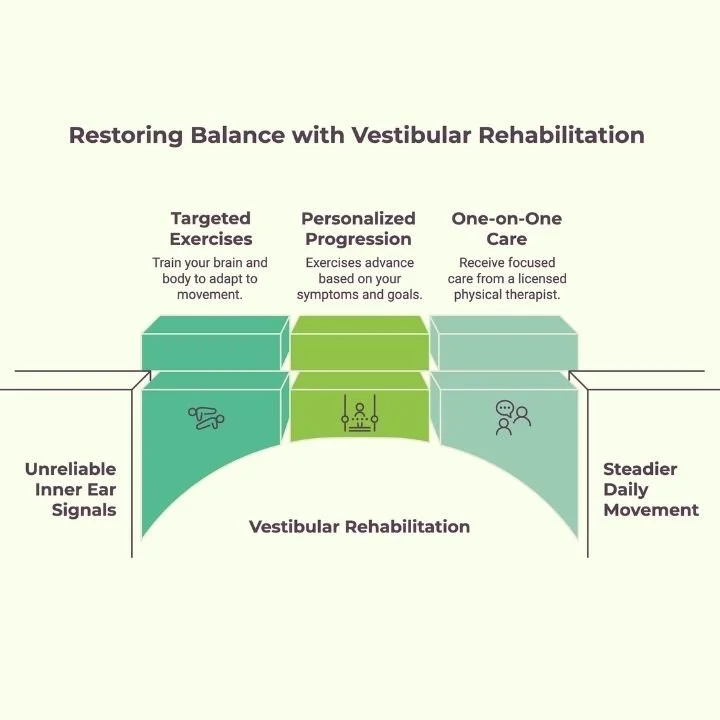
Vestibular rehabilitation helps restore balance by training the brain to use visual and body-position signals more effectively when information from the inner ear is unreliable.
Repeated exercises help the nervous system adapt to head turns, position changes, walking, and visually busy environments. This can reduce dizziness and improve steadiness during daily movement.
Your program progresses based on your symptoms, daily demands, and recovery goals. Physio Chicago provides 45-minute, one-on-one sessions with licensed physical therapists, with no assistants or shared treatment time.
When persistent dizziness needs medical evaluation
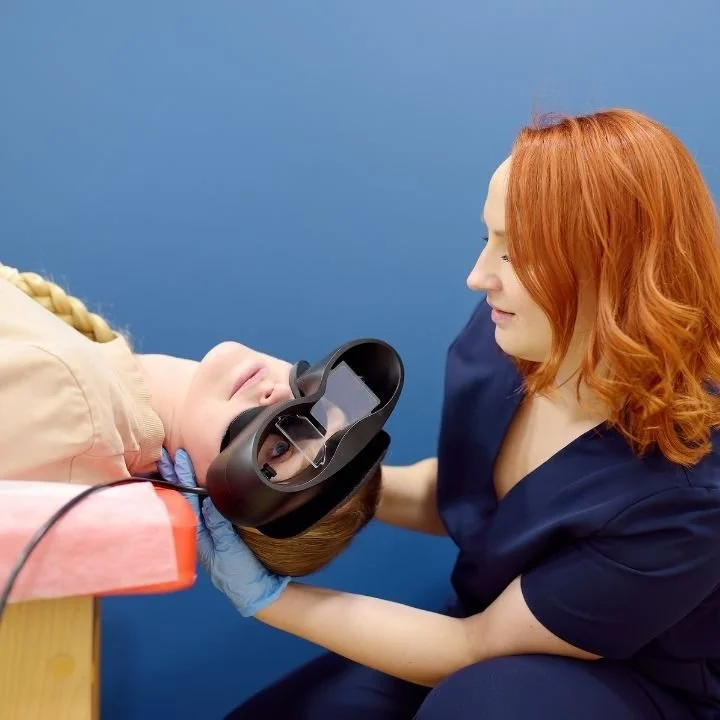
Persistent dizziness needs medical evaluation when it is sudden, worsening, recurring, or affecting your ability to move safely.
A physical therapist can assess movement-related dizziness, balance limitations, and vestibular symptoms. However, it can also be linked to neurological, cardiovascular, medication-related, or inner-ear conditions that need medical care.Seek emergency medical attention if it occurs with:
Sudden weakness, numbness, facial drooping, or trouble speaking
A severe or unusual headache
Chest pain, fainting, or shortness of breath
New double vision or vision loss
Major coordination problems or inability to walk
New hearing loss
A significant head injury
Persistent vomiting or severe dehydration
Schedule a non-emergency medical evaluation if dizziness keeps returning, lasts longer than expected, causes falls, or makes work, driving, exercise, or normal daily activities difficult.
Address persistent dizziness with vestibular therapy in Chicago
Persistent dizziness does not always mean your vestibular disorder is permanent. Some conditions resolve, while others improve through medical treatment, targeted rehabilitation, and a plan that helps you return to movement safely.
Physio Chicago provides individualized vestibular and post-concussion therapy for people managing dizziness, vertigo, imbalance, and movement-related symptoms. Your therapist takes the time to understand what is limiting you, then builds a plan around better balance, steadier walking, and more confidence with daily activity.
Get a Free Consultation to discuss vestibular therapy in Chicago and take the next step toward moving with more confidence.
FAQs about vestibular disorder recovery
How long do vestibular disorders last?
Vestibular disorders may last seconds per episode, days, weeks, or longer. Recovery depends on the diagnosis, cause, severity, and how the balance system responds over time.
Do damaged vestibular nerves heal?
Damaged vestibular nerves do not always return to their original state. Recovery often comes through vestibular compensation, where the brain relies more on visual and body-position signals. Vestibular rehabilitation uses exercises to support this adaptation.
Can vestibular issues cause tiredness?
Vestibular issues can cause tiredness because the brain works harder to process balance and visual information. Poor sleep, headaches, anxiety, and reduced activity may also add to fatigue.
Is there medication for vestibular disorders?
Medication may help manage nausea, migraine activity, infection, or inner-ear fluid problems, depending on the diagnosis. A doctor can determine if medication is appropriate.
Can you live a normal life with vestibular disorder?
Many people with vestibular disorders return to work, exercise, and daily activities with the right care plan. Treatment may include medical care, vestibular rehabilitation, and changes that reduce symptom triggers.
